Solitaire Word Association
PlaySimple GamesWord
4.9136.00 Reviews
- Version
- 1.40.0
- Installs
- 50.00K
- Age Rating
- Everyone
Screenshots
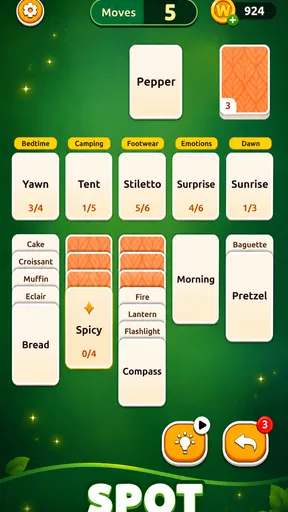
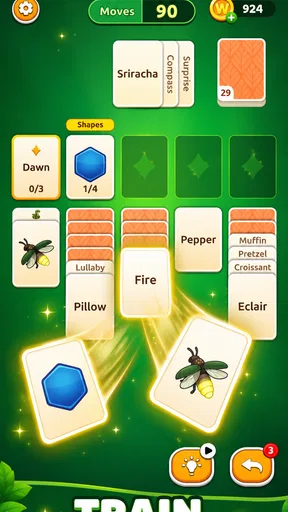
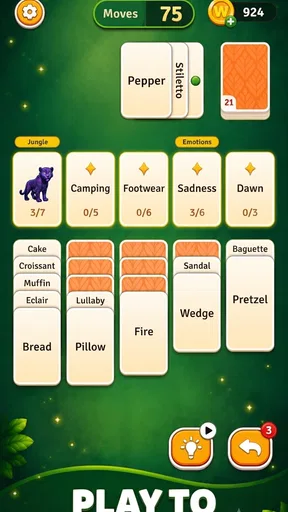
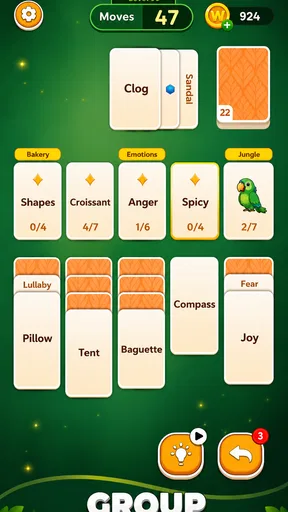
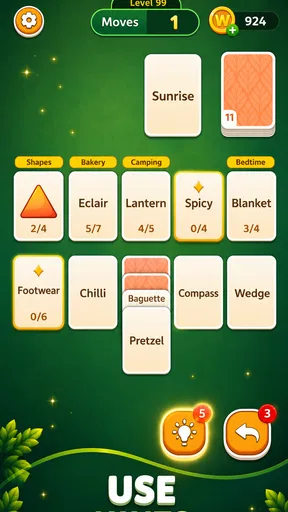
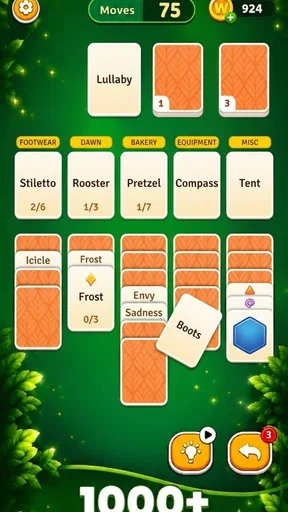
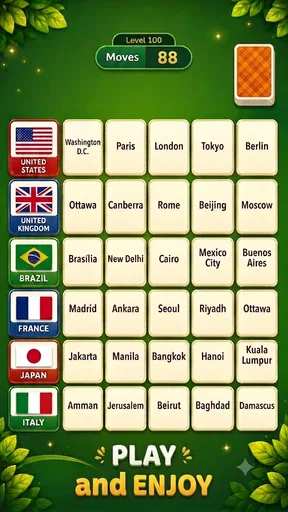
Our Review of Solitaire Word Association
 Analysis by Appyee
I approached Solitaire Word Association expecting a light word game, but its appeal is more specific than that. It combines the familiar rhythm of solitaire with the mental jump of connecting related words, so each turn asks me to think rather than simply clear a board. That makes it a comfortable choice for short breaks, especially when I want something calmer than a timed puzzle or a competitive game.
PlaySimple Games developed this free word game for players who enjoy language-based challenges with an easy entry point. It is rated for Everyone, runs on Android devices using version 7.0 or later, and its current version is 1.26.0. The game has built a 4.6 average from around one thousand ratings and has passed fifty thousand installs, which gives it a useful level of early player interest without making it feel like an overcrowded mainstream title.
How the word-solitaire idea feels in everyday play
The basic attraction is the contrast between the two halves of the design. Solitaire suggests a familiar, orderly card-game structure, while word association depends on instinct, vocabulary, and context. I found that combination more engaging than a standard word search because I was not only looking for letters or spelling patterns. I was trying to understand how one clue could lead naturally to another.
That distinction matters during short sessions. If I have only a few minutes while waiting for an appointment, I can open the game, solve a small stretch, and stop without needing to commit to a long campaign. The format also suits the end of the day, when I want something interactive but not overly intense. It gives my attention a clear task without demanding the reflexes of an arcade game.
The word category is a good fit for players who enjoy vocabulary, associations, and lateral thinking. It can also work for someone who usually avoids traditional card games but likes the visual familiarity of solitaire. On the other hand, a player looking for classic Klondike rules, competitive leaderboards, or a purely spelling-focused challenge may find the hybrid approach less satisfying than a dedicated alternative.
A practical routine for solving more consistently
My most useful habit was to avoid locking onto the first association that came to mind. When a word seemed obvious, I treated it as one possibility rather than the answer. I then looked at the surrounding choices and asked which connection would leave the most workable path afterward. This small change made the game feel less like guessing and more like planning.
Another helpful approach is to separate familiar words from flexible ones. A direct relationship may be correct, but broad words can connect to several ideas. I found it better to use a clear, narrow association early when possible and save ambiguous terms until the remaining options made their meaning easier to read. That is a simple tactic, but it gives the solitaire structure more strategic weight.
The strongest part of the experience is the balance between recognition and uncertainty. I often knew that two words belonged together, yet still had to decide whether that relationship was the intended one. That moment keeps the game from becoming a passive matching exercise. It is also why the experience can feel rewarding even when the individual words are not especially difficult.
Who will get the most from it
I would recommend it first to people who like word puzzles but want a gentler pace. It is suitable for a commuter, a student taking a short mental break, or anyone who enjoys keeping a small game available for idle moments. The Everyone age rating also makes it approachable for a broad audience, although individual vocabulary preferences will naturally affect how comfortable each player feels.
It may be particularly appealing if you enjoy games that reward concentration without requiring a notebook or a long uninterrupted session. The association format encourages you to think in meanings rather than only in letters, so it can feel refreshing after playing the same type of crossword or word-search puzzle repeatedly.
I would be more cautious about recommending it to someone who wants a deep traditional solitaire simulator. The card-game identity is part of the appeal, but the word layer changes the reason for playing. Likewise, players who dislike uncertainty in word puzzles may prefer a game with fixed definitions, an extensive dictionary, or more direct spelling mechanics.
What the current release suggests about the game
The current release, 1.26.0, is the version I would use when judging the game today. Its presence indicates that the project has moved beyond a first rough launch and is being maintained as an active product. The game was released on March 23, 2026, so the early experience should be viewed as a relatively new entry in the word-game space rather than a long-established classic.
That context changes how I interpret its current position. The install count and rating show that players are already trying it and responding positively, but they do not automatically mean it has the depth or polish of older games with years of accumulated content. I see it as a promising, accessible release whose identity is already clear: word association presented through a solitaire-inspired format.
There is also a practical point for existing users. Keeping the game updated means using the current version rather than judging it from an older installation. With a new title, small refinements can have a noticeable effect on how smooth the flow feels, how understandable the puzzles are, and how well the progression holds together. I would therefore check that my device meets the Android requirement and that the installed build is current before deciding whether a problem is fundamental to the game.
What the release means for new and returning players
For a new player, the current state is encouraging because the game is free to start and easy to understand at a high level. There is no need to learn a complicated genre before trying it. I could approach it as a word puzzle first and let the solitaire presentation become familiar through use.
For someone returning after an earlier build, the sensible expectation is continuity rather than a completely different game. The version number shows ongoing product development, but it does not by itself promise a major redesign. I would return with an open mind, notice whether the pacing and puzzle flow feel better, and avoid assuming that every future change will transform the central format.
The free entry point is useful, but it should not be confused with an entirely cost-free experience. In-app purchases range from $1.99 to $69.99 per item. That broad range is important when deciding how to play: I would begin without spending, learn whether the word-association style genuinely suits me, and only consider a purchase if it solves a specific frustration rather than becoming an automatic habit.
My practical advice is to set a personal boundary before buying anything. If I am playing for relaxation, I do not want a difficult clue or a stalled session to pressure me into spending immediately. Taking a break, revisiting the puzzle later, or accepting that the game is not offering the right level of challenge can be better choices than treating every obstacle as something that must be removed.
Where it differs from familiar alternatives
Compared with a standard solitaire game, this title gives vocabulary a central role. Traditional solitaire is mainly about card order, probability, and planning available moves. Here, the mental work comes from interpreting relationships between words. That makes the experience more language-driven and less dependent on whether I enjoy arranging cards according to conventional rules.
Compared with a crossword, it feels less like completing a grid from carefully written clues. A crossword usually rewards precise knowledge and spelling, while association puzzles can reward a broader sense of context. That can make this game more approachable when I want a looser challenge, though it may also feel less satisfying if I prefer exact definitions and a strong sense of linguistic precision.
Compared with a word search, the difference is even clearer. A word search mainly tests visual scanning, whereas this game asks me to form connections. I would choose Solitaire Word Association when I want to think about meaning; I would choose a word search when I want a more mechanical, calming activity that does not require as much interpretation.
That comparison also reveals the main trade-off. The hybrid format gives the game a distinctive personality, but it will not replace every other word or card game. Its value depends on whether the combination feels natural to you. In my experience, it works best when I want a middle ground: more thoughtful than basic solitaire, but less formal than a demanding crossword.
Limitations worth considering before installing
The biggest possible friction is vocabulary subjectivity. Associations that feel immediate to one person may feel forced to another, especially when a word has several common meanings. I found that this can create a different kind of difficulty from a spelling mistake: the issue is not always knowing the word, but understanding which relationship the puzzle expects.
That makes the game less ideal for players who want every answer to have only one obvious interpretation. It may also be challenging for people playing in a language they are still learning, because association depends on cultural context and everyday usage as much as dictionary knowledge. For those players, a more direct vocabulary trainer could be a better fit.
The other limitation is the tension between free access and optional spending. The game can be tried without an upfront price, which lowers the barrier to entry, but the presence of purchases means I would pay attention to my own habits. A free game is most enjoyable when I remain in control of the decision to buy, rather than feeling that progress depends on it.
I would also avoid expecting a large, fully mature ecosystem simply because the game already has a strong average rating. Around ninety written reviews and roughly one thousand ratings suggest useful early feedback, but they represent a smaller history than the feedback surrounding long-running word-game brands. The rating is a positive signal, not a guarantee that every vocabulary level, device, or personal preference will match my experience.
Small decisions that improve the experience
First, I would play with enough attention to notice the relationship behind each solution. Rushing through familiar words can make the game feel shallow, while pausing to identify why a connection works makes the format more rewarding. This is especially useful for deciding whether the game’s central idea actually appeals to you before considering any purchase.
Second, I would use failed guesses as information about the puzzle’s logic rather than as evidence that I lack vocabulary. If a connection seems plausible but does not fit, I would reconsider the surrounding words and look for a more specific relationship. This mindset reduces frustration and turns an incorrect attempt into a clue about how the current challenge is constructed.
Third, I would match the game to the right kind of break. It is a good choice when I want a focused activity that can be paused mentally between tasks. It is not the best choice when I need complete relaxation with no decisions at all, because even a short session asks me to interpret, compare, and select.
Finally, I would judge the game over several sessions rather than one difficult puzzle. Word-association games can vary in how natural their clues feel to an individual player. A single awkward moment may be annoying, but a broader sample tells me whether the overall balance between familiar and surprising connections works for my vocabulary.
My recommendation for the next stage of the game
At this point, I see a clear foundation rather than a finished statement about the genre. The current version establishes a recognizable identity, and the early rating suggests that the concept is connecting with players. What I would watch next is how the game develops around that identity: whether future updates make the progression more satisfying, keep the word relationships feeling fair, and preserve the relaxed appeal that makes short sessions convenient.
For existing users, the most important question is whether continued updates improve the everyday flow without making the experience feel more demanding. A word game like this lives or dies by the quality of its small decisions. Clear connections, sensible difficulty, and a comfortable pace matter more to me than flashy additions that distract from solving.
For new users, the decision is straightforward. It is free to try, supports Android 7.0 and above, and offers a distinctive alternative to both conventional solitaire and conventional word puzzles. I would install it if I wanted a casual game built around meaning and association, especially for short sessions during the day.
I would skip it if my priority were strict classic solitaire, competitive intensity, or a dictionary-style learning tool. Those needs call for more specialized alternatives. But if you like the idea of arranging a familiar game format around unexpected word connections, this is a worthwhile experiment. My recommendation is to try it patiently, keep spending optional, and decide based on how naturally its associations fit the way you think.
Privacy and Permissions
See what permissions an app requests and how it handles your data.
- Photos/Media/Files
- read the contents of your USB storage
- Storage
- read the contents of your USB storage
- Wi-Fi connection information
- view Wi-Fi connections
- Other
- view network connections, full network access, run at startup, control vibration, prevent device from sleeping, set an alarm, Google Play license check, read Google service configuration
Verdict
Strengths of Solitaire Word Association
- Combines classic solitaire mechanics with relaxing word puzzles.
- Simple controls make it easy to play with one hand.
- Short rounds fit well into quick breaks or commutes.
- Word challenges can help reinforce vocabulary and spelling.
- Progression provides a reason to return regularly.
Limitations of Solitaire Word Association
- Some word answers may feel subjective or overly obscure.
- Difficulty can vary noticeably between individual puzzles.
- Frequent play may make the core gameplay feel repetitive.
- Hints or boosters may be limited unless earned or purchased.
- Requires attention to both card strategy and word clues.
Other Releases by PlaySimple Games
View All


Similar Picks in This Category
View All
Word Search - Word Puzzle Game
Bluetile4.8

Word Search Quest - Puzzles
Blackout Lab4.8

CodyCross: Crossword Puzzles
Fanatee, Inc.4.7

Words of Wonders: Crossword
Fugo Games4.9

Wordscapes: Word puzzle game
PeopleFun4.7

Word Search Explorer
PlaySimple Games4.9
Frequently Asked Questions
What is Solitaire Word Association?
Solitaire Word Association is a word puzzle game that combines classic solitaire-style card play with vocabulary and association challenges. Instead of simply matching cards, you solve word-related tasks by identifying connections between clues, terms, or categories. It is designed for casual sessions, offering a relaxing format while still requiring concentration, pattern recognition, and a reasonably broad vocabulary.
How do you play Solitaire Word Association?
Gameplay generally involves reviewing the available cards, clues, or words and selecting answers that are meaningfully connected. As you progress, you clear stages by making correct associations and following the game’s solitaire-inspired mechanics. The early levels are easy to understand, but later puzzles may require synonyms, general knowledge, careful reading, and some trial and error. The in-game instructions explain each mode before you begin.
Does Solitaire Word Association work offline?
Many of the main puzzles can usually be played without a constant internet connection, which makes the game convenient for travel or areas with limited service. However, certain features may still require internet access, including advertisements, cloud synchronization, leaderboards, daily challenges, updates, or optional rewards. Availability can depend on the version installed and the device, so it is best to test offline play after downloading.
Is Solitaire Word Association free to download and play?
Solitaire Word Association can typically be downloaded and played for free, allowing users to access the core puzzle experience without an upfront purchase. Like many free mobile games, it may include advertising, optional in-app purchases, extra hints, or other convenience features. You can normally progress without spending money, although purchases may reduce interruptions or help when a particularly difficult puzzle causes problems.
Is Solitaire Word Association suitable for children and all skill levels?
The game is approachable for casual players because its basic controls and puzzle structure are easy to learn. Nevertheless, some word associations may depend on reading ability, vocabulary, cultural knowledge, or age-specific understanding. Parents should review the store rating, advertising behavior, and purchase settings before allowing children to play. It is especially suitable for users who enjoy relaxed word games with gradually increasing difficulty.
Play our best games!


